A Commonplace book by Sandy and Penny Burnfield

Sunday, May 27, 2007

A Hundred Years of Burnfields in Longstock

by

Alexander (Sandy) Burnfield

My grandfather, Alexander Burnfield, was born in Caputh, Little Dunkeld, Perthshire. He first became a Blacksmith and then after learning Latin from a Dominie - a country schoolmaster who was also a Presbyterian minister - he qualified as a Vet from the Royal Dick Veterinary College, Edinburgh. He married Isabella Mary Young and they had three sons – Robert, my “Uncle Bob” - Alexander “Alister”, my father - and David, who became “Uncle Bunt.” A fourth brother, James - born between my father and Uncle Bunt - died from diphtheria aged eighteen months – the family was grief stricken and little Jimmy has never been forgotten.

The Foreigners

100 years ago my grandfather and his family travelled down to Southampton from Dundee in a potato boat. It was quite rough and all apart from my father, a little boy of 6 years old, were sick. Their destination was Hazeldown Farm in Longstock, and my grandfather left behind a thriving Veterinary practice, a Blacksmiths and Farriers business and his position as a Baillie (councillor) in the Perthshire town of Crieff. He had decided to move to England because he was advised to stop working so hard for medical reasons and to avoid long and hilly journeys through the glens in his pony and trap on Veterinary business. But the reason he came to Longstock was because his wife’s brother, David Young, farmed at Westover in Lower Clatford and had sent him word that Hazeldown Farm was for sale. Although the family travelled by boat to Southampton, their car (rare in those days) and furniture came by train to Stockbridge Station – (or was it Fullerton?)

When they arrived at Hazeldown my father was 6, Uncle Bob was 9 and Uncle Bunt was 18 months old. The family continued to keep in close touch with their family connections in Scotland and my father went back to farm there, once for a three year spell when in his thirties. Apparently we, the Burnfields, were known as The Foreigners in Longstock for about 30 years! Certainly there are many stories of locals not understanding the broad Scots accent they brought with them. By all accounts my grandfather was easy going and sociable but my grandmother Isabella could be fierce and sharp tongued, and was very hard working, expecting others to work hard too. A few years later my great grandmother, Marjory Burnfield, joined the family to live in a specially built cottage next to Hazeldown Farm – where “Brommer” Webb now lives.

Captain Alexander Burnfield MRCVS of the Black Watch

The three boys went to school in Longstock and then Andover Grammar School. During the First World War my grandfather was in the Black Watch (Scottish Highland Regiment). Captain Alex. Burnfield served in the Veterinary Corps and his duties included vetting horses at Windmill Hill Down, near Tidworth, before shipment to France for use by the Army. Sometimes a horse would be in-foal and these were often taken to Hazeldown for safekeeping, and only returned when the foals had been born. These apparently remained at Hazeldown!

My mother Joan Bright first met my father when he was accompanying his father on a veterinary visit to her father, John Bright, who farmed at Bossington, Houghton. They married in 1943 at the little Bossington Church of St James (where I was later christened.) They used the same horse-drawn gig for their wedding as my father’s own parents had done for their own wedding, and that my sister Jane and her husband rode in years later for theirs. This gig is in Isobel’s safekeeping awaiting its next call to duty.

A. Burnfield and Sons Ltd.

By this time the three brothers had bought two more farms so that each could have one of their own. Uncle Bob lived at Little Ann Bridge Farm, Andover and Uncle Bunt at Windover Farm at the Stockbridge end of Longstock. My father lived at Hazeldown together with my mother and my brothers Rob and David and sisters Isobel and Jane. Our Uncle Bob and Uncle Bunt never had children of their own but were very much involved with us and our education. Uncle Bob died in 1958 and eventually the three farms became our family business - A. Burnfield and Sons Ltd. (A. Burnfield being our grandfather and the sons, his three boys - Dad, Uncle Bob and Uncle Bunt.) Our grandfather and Uncle Bob had died by then so the farming business was run by Dad and Uncle Bunt, and then later by my brother David and sisters Isobel and Jane.

When Mr Lewis (of Partnership fame) came to Longstock he sometimes invited my parents to tea with him – on these occasions he and my father argued about lots of things – he had been very pleased when the family bought Windover Farm and did not bid against us – he assumed that they would move there and he could buy Hazeldown – but to his chagrin we kept both! My father learnt a variety of smithing and veterinary skills from his father – and spent many hours in the Shop at Hazeldown mending broken parts and fixing stuff generally on the farm – I used to be his boy when he was working on the blacksmiths forge at Hazeldown, and worked the bellows for him.

I was the oldest and decided I wanted to be a doctor rather than join the farm – my brother Rob studied law, and is now a Tribunal Judge in Southampton. I thought my father and Uncle Bunt would not be pleased – but they were very accepting – and said every Scottish family should have a doctor and a lawyer in it. My father pointed out that his grandmother Marjory’s first cousins were the brothers Sir James Mackenzie and Lord Amulree, brought up on a farm near Crieff. James was a famous Heart Specialist and inventor of the venous-arterial Polygraph (precursor of the ECG) while his brother had been a renowned constitutional lawyer.

The extended clan and Longstock connections

So Isobel, Jane and David now manage our family business. Hard working and inventive in true Burnfield style they are managing to adapt the farming enterprise to the 21st century – the farms will be totally organic and managed even more environmentally by 2008. From the first our family has always had close connections to the villagers of Longstock and involvement in village activities. My youngest brother David, following in the footsteps of both our father and grandfather, is currently serving the community as Chairman of the Longstock Parish Council.

We have been well supported by the men and women who have worked and still work on the farms – they have become friends and honorary members of the clan and they are an integral part of the farming enterprise. Foremost among these is “Brommer” - Alfred Webb - who first came to work for us when he was 14. He is still working for us, now part time, and his service has been continuous for the last 76 years without a break. Brommer, now aged 90, has known all the Burnfields and he is a link for us between the generations as well as being an entertaining historian of Burnfield times.

There are lots of younger Burnfields about nowadays, but I think they should be included in the next article in this series which will be due in 2107 and titled 200 years of Burnfields in Longstock.

May 2007

Sunday, January 21, 2007

Ridiculous Sandy

I dance to honour my direct descent from Somerled. My Y DNA sequence (R1a1 - Old Norse Haplogroup) has been put throgh a database and shows than Somhairle Mor Mac Ghillebridhe was a paternal ancestor in the direct male line - he was progenitor to the Chiefs of the MacDonald, Douglas and MacAllister Clans, and was the first Lord of the Isles. Posted by Picasa

Liz and Della with Chocolate de la Suiza

Posted by Picasa

Monday, January 08, 2007

Steff

Steff is now 12, oldest of Sarah's kids, and our second oldest grandchild. I took this because we had found my digital Camera and we were seeing if the batteries were still acive - they only lasted for this one shot and a very short video she did. They are charging up now.... Posted by Picasa

Sunday, January 07, 2007

Me taken by the "Van Gogh" Studio at the Arcade in Lyme...

 Posted by Picasa

A January morning at Lyme Regis

Paul and I had a great few days at Lyme, meeting Nomad and Mary on a couple of occasions. This is a view of the Cobb end at Lyme taken from walking along the "new" shinlge beach. Posted by Picasa

Monday, January 01, 2007

Daffodills at Terstan on New Years Day 2007

A Very Good New Year to You!

Judging by the early flowering of these Daffodills lets hope it does not prove an even warmer year than 2006 - did you say something about "Global Warming....? At the moment it is warm, windy and wet - no one is going on about a drought anymore at least...As for snow, I almost forget what it was like. Posted by Picasa

Wednesday, December 27, 2006


Goosander

Mergus merganser

These handsome diving ducks are a member of the sawbill family, so called because of their long, serrated bills, used for catching fish. A largely freshwater bird, the goosander first bred in the UK in 1871. It built up numbers in Scotland and then since 1970 it has spread across N England into wales, reaching SW England. Its love of salmon and trout has brought it into conflict with fishermen. It is gregarious, forming into flocks of several thousand in some parts of Europe.

Helen Deavin, of the RSPB, Penny's Goddaughter, identified this on the Test at Terstan yesterday - I have not seen it before.

Thursday, December 21, 2006

Mum having her Guinness this morning

 Posted by Picasa

Monday, November 06, 2006

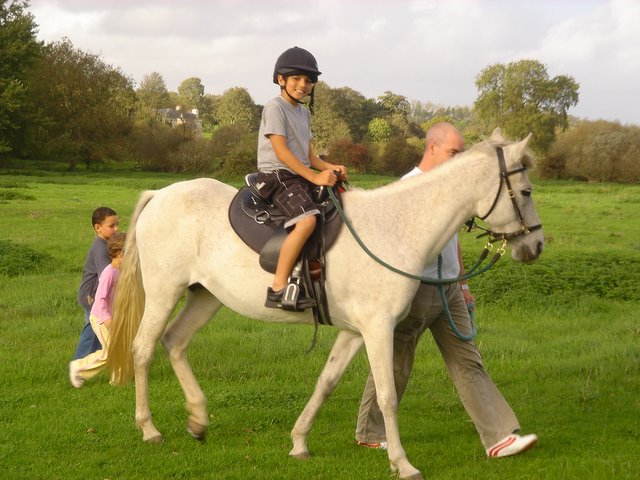
Jessie on Sonadora, with Dad Wayne

 Posted by Picasa

Birthday Boy Alex on Sonadora

 Posted by Picasa

Morning Glory

 Posted by Picasa

Sunday, June 04, 2006

Sunday, March 05, 2006

Wise words from Rio of Lyme Psychics


Knowledge is someone else's attempt to pass on their experience and the sad thing is this is a form of second hand learning that rarely gets to sink to the readers heart because it isn't a personal experience.
It has been my experience that the things that the heart remembers are the real experiences as opposed to second hand knowledge. It is the latter that tends to fade in the mind.
I mean those studying for exams are encouraged to read and re read until the knowledge sticks, whereas something each of us experience directly is easily remembered.
You only have to think about how vivid childhood memories are, to see what I mean.
Apologies, however, for trying to impress my experiences on you in an attempt to share the knowledge with you.

Thursday, February 16, 2006

The Old Man's Wish - good one Walter


If I live to grow old, as I find I go down,
Let this be my fate in a country town;
May I have a warm house, with a stone at my gate,
And a cleanly young girl to rub my bald pate.
May I govern my passions with an absolute sway,
Grow wiser and better as my strength wears away,
Without gout or stone, by a gentle decay.


- The Old Man's Wish –

WALTER POPE
English physician, astronomer and writer
(1630 - 1714)

Saturday, February 04, 2006

I celebrate Imbolc on February 4th – halfway between Yule and the Spring Equinox. It is when we first really notice the lengthening of the days. The Ewes are pregnant and lactating and candles and fires are lit to celebrate the strengthening sun and fertile earth – seeds are sown. The Godess Brigit/Bride will be passing by with her cow this evening, and I have poured milk into the bare earth for them to ensure fertility and a good growing year – and more milk!

Here is a story I wrote a few years ago following an Imbolc dream:

Message from Elk - A Medicine Dream

I was somewhere on holiday in the North-West of Scotland, perhaps on one of the islands. I left the hotel to go and watch the burning of the "skirries". These appear to have been some small haystacks which were set on fire in the early morning near the coast. As I set out for the skirries, I saw them smoking and burning in the distance. The smoke blew over me and then I suddenly realised that I was looking at a large herd of elk. They were slowly wandering across a plain with snowy mountains beyond. I then saw that I was some sort of large cat hiding in a broken down cabin. I could see that I had a grey-brown face and similar features to a domestic cat only much larger. I could not be seen by the elks.

One of the larger elks, a bull elk if there is such a thing, came towards me and I could see that he had spotted me hiding in my broken-down cabin. I did not move. He came very near to me and I could see that he was exceedingly big with large horns and a very angry expression. Elk spoke to me. "If I could get at you", he said, "I would hit you hard on the nose and kick you in the stomach!" I did not move - I did not flinch; all I thought was "I have only come to watch." Elk stared at me aggressively for a bit longer, then he went back to join the herd. I awoke.

I don't know whether you have ever been spoken to by an animal before but for me this was unusual. I had only experienced it on one occasion previously and I had failed to record it so have no memory now of which animal it was or what the message was. On this occasion I decided that I would record the dream and I would also try to find out what it was telling me. I realised that the animals in my dream were in some ways part of my own psyche and that the message had to do with some form of imbalance in my life at this time.

The dream was somehow strengthened in my mind because it had occurred on the morning of Imbolc, the pagan Festival of Renewal, otherwise known as Candlemas. I consulted Kenneth Meadows's book, Shamanic Experience (Element Books, 1991) and found the following information. "On the yearly cycle, the days around the times of the eight seasonal festivals of the ancient peoples of the northern hemisphere are also potentially fruitful times to connect with the unseen forces. Imbolc - around 2nd February, was the Festival of Renewal, an occasion for cleansing and purification in preparation for fresh approaches." In my own mind Candlemas also has to do with light, and marks a period of the year when we first notice that the days are getting longer and the nights shorter.

I decided to investigate the meaning of the cat-like creature in my dream and of the elk. Again I consulted the same book. Although I had previously read the section on Imbolc, I had not read anything on the so-called "power" or "medicine" animals. I concluded that the cat-like creature was some form of mountain lion or cougar because this would fit in with the context of elks in what seemed to be a North American geographical setting. To quote from Shamanic Experience:

"Cougar

Cougar is the mountain lion of western North America, Mexico and Central and South America, and is also known as the puma. It has a handsome cat-like face and a smooth and graceful body, with tawny-tan and grey colouration. As a power animal, cougar encourages you to take charge of any troubling situation and to use your powers of leadership to influence events. It urges you to overcome your uncertainty and aloofness by accepting personal responsibility, and thus generate positive action. Cougar provides strength, determination and foresight, and an assurance that right action leads to right results. It is endeavouring to show you how to be your own leader.

"Elk

Elk stresses friendship and co-operation - the sense of unity that comes from belonging to a group or community. It emphasizes the need to establish relationships. If you are engaged in some kind of competitive activity, whether in your working life or in a personal relationship, you may feel threatened or under pressure. You need some equilibrium. Elk shows the value of friendships and of sharing your interests and experiences with others. Elk stresses the importance of finding time for refreshment and reflection, and of renewing one's strength. Elk has to do with stamina and the need to go to those of the same gender for support."

Now the message is clear! The dream is indeed telling me something that I need to know, something that I need to act upon. It would appear that my individuality has become too great recently and it may well have threatened some of the communities that I operate in, including family and work. It would seem that Elk is telling me, Cougar, to stop rocking the boat and being a threat to various communities. He is telling me to lie low and that if I intrude any further I will come to harm.

I mused upon the significance of this message in terms of my current life and realised that it needed my full attention. In the last few weeks I have found myself being over assertive in my family and at work, and indeed a friend told me recently that I have been uncompromising and overbearing. A colleague at work also suggested that my responses to Health Service changes needed to be co-ordinated and linked with the responses of others rather than communicated individually.

Thank you Elk for your message! I will listen and perhaps, with a little help from my friends and family, I will withdraw my individualistic approach seen by others as unhelpful and aggressive. The fact that your message was give to me at Imbolc adds to its strength and I shall in future pay particular attention to this and other seasonal festivals when, indeed, it does seem that the times are auspicious for connecting with the "unseen forces"!

Sandy Burnfield,

Imbolc, 2.2.92.

Wednesday, February 01, 2006

Penny's tribute to Christopher Lloyd

Farewell Christo

A sad piece in the newspaper today: Christopher Lloyd has died. Sandy spotted it first and was surprised by my reaction – “You didn’t know him”. But I did. He had been my closest gardening companion for over 30 years.

When I first had a garden I scoured the local bookshop for help. By chance I lighted on ‘The Well Tempered Garden’. It became my bedtime reading for several months. Christo (as I later learnt he was called) was knowledgeable, articulate, but above all very funny. He made you feel you were there with him, chatting away, sharing anecdotes and (sometimes
outrageous) opinions.

Since then I have looked out for everything he wrote. I must have most of his books. Visits to the dentist were greatly improved by reading his articles in ‘Country Life’ Truly the source of most of the information I sought, he was, by turns, stimulating, infuriating and totally inspiring. Over the years he became a sort of friend.

I only managed to visit Great Dixter once. I saw Christo weeding, head down (in every sense of the phrase) and bum up, in a flower bed by the house. With British reserve, I said nothing. Do I regret it? Perhaps. I would like to have told him how much pleasure he had brought me. But a garden needs to be looked after, and I know how I would feel if my weeding was constantly interrupted.

I was delighted to see that plans were afoot to keep the garden going. He certainly found a fellow mind in his Head Gardener, Fergus Garrett. A trust has been set up to save Great Dixter for the future. It will change, of course. He would have hated it to be a museum.

The obituary said that Christopher had learnt gardening discipline from the Japanese. If he had been Japanese he would have been a National Treasure.

My mother once told me that when her Father died she regretted that all his knowledge and experience had gone. But Christo shared his with us, and we are richer for it.

Tuesday, January 31, 2006

Penny's report on our "Oriana" cruise

ORIANA

We started from Southampton. It could hardly have been more convenient if the ship had berthed outside our door. A short drive, unload our baggage onto a conveyer belt and we were there.

First impressions: The ship is vast and it took us a long while to find our way around. There is a theatre, cinema, cabaret lounge, and a recital room. About five bars, two enormous restaurants, a cafeteria, and a cafe, three swimming pools, a kids area, a gym, beauty salon, two shops, a library, a casino and an amusement arcade. Our cabin was spacious and very comfortable, with a sitting area and balcony.

The food was delicious and we could have spent the entire day eating! Of course we didn’t, and even managed to come back almost the same weight as when we had started (almost in my case – literally in Sandy’s). We sat at a table for eight and were lucky with our dining companions. All were delightful, and we became especially friendly with Eileen and Graham from Scotland. On our first evening Sandy found himself sitting next to a man who had known Sandy’s uncle when he was a boy!

I had been rather apprehensive about the trip. I thought I might be bored. But there was plenty to do, and I wish now I had found more time to go to the talks and other activities. I joined a ‘Pilates’ exercise class, and went to this most mornings. We saw a couple of films and some great shows in the evenings.

If there was one snag to going cruising in November/December it was the weather. We had a Storm Force 12 going down the coast of Spain, and ran into several gales both in the Mediterranean and on our way home. Oriana is well stabilised, but there is an odd juddering feeling and occasional loud bangs (is it an iceberg?!). We survived the swell, mainly thanks to a bottle of Brandy, but others fared less well. Needless to say our balcony was not used all that much, while we were at sea.

Our first stop was in Spain, at Malaga. We were only here for half a day, and opted to go on a trip to the caves at Nerja, which were amazing, with the largest stalagmites and stalactites in the world. Sandy was very taken with the town, and wants to go back one day. We then had several days at sea en route for Egypt. We could see the North coast of Africa (surprisingly mountainous) and had a distant view of Malta (surprisingly flat). Dad lived on Malta in the late 1920’s with his parents, when my Grandfather was posted there by the Admiralty. It would have been good to have seen more.

Port Said, at the north end of the Suez Canal, was our next port of call. Nearly all the passengers took the chance to visit Cairo, though this meant we had to travel in a convoy of eighteen busses with police escort. It takes about two and a half hours, and fairly dull, apart from the ornamental pigeon towers attached to most of the little farms. We had a general impression of an impoverished country, very arid and flat. Cairo is enormous, full of high-rise concrete apartments and enveloped in a cloud of smog. More memories of Dad – he was here for about 4 years during the war – and I felt sorry for him, though it may have been better then.

We went to a spectacular Mosque on a hill and to Saladin’s citadel; then for a pleasant short cruise down the Nile, with belly-dancers and a good lunch. Then to the Pyramids and the Sphinx. They are amazing, but perhaps somewhat diminished by having been seen so many times before on the television! There was all the hassle with people trying to sell us souvenirs. I found it rather trying, but Sandy is more accepting of such things. When you see how poor most of the people are it is to be expected. We only had a little time there before having to embark on our long trip back to the ship.

The next day we stopped at Cyprus. We have visited the island before, some years ago, and we opted for a trip to a Crusader castle and an old Roman site. I think there was an amphitheatre every place we disembarked. Then to Rhodes, which we liked very much. We went to the pretty little town of Lindos, where we saw more ruins (well, the cruise was billed as ‘Ancient Wonders’). Bought some ceramics, presents for friends and family, and wondered around Rhodes Town, with its Crusader buildings and walls, a thousand years old.

Next to Turkey, where we visited the remains of the Greco-Roman town of Ephesus. Once a thriving city and port, the harbour silted up and the place was abandoned until it was excavated in the 20th century. It was not built over, which was the fate of so many other cities from those times. It must have been a beautiful city, with civic fountains, a beautiful library, and a vast amphitheatre. There is a sign to the local brothel! This is a fascinating place. We had lunch in the port of Kusadasi, and were amused to see a shop offering ‘Genuine Fake Watches’!

Athens was our next stop. We have visited the Parthenon before, so we opted instead to go to the Temple of Poseidon, about an hour’s drive away. The temple is high up on Cape Sounion, a dramatic and tranquil location.

Two days at sea, skirting the south of Sicily brought us to Sardinia and its capital Cagliari. An attractive city with lovely old buildings, surrounded by ancient salt-pans complete with flamingos. We visited the Museum, and were intrigued by the tiny bronze statues made by the ‘Nuragic’ people who lived here in ancient times: people, animals and ornamental boats. Our fellow travellers were less amused by the hole-in-the floor toilet. Our final visit was to the historic port of Cadiz, on the south coast of Spain, but just in the Atlantic. From here many ships voyaged to the New World. I went on a trip to Seville, a vibrant City, while Sandy opted for the less energetic sherry-tasting visit to Jerez.

Although the weather at sea was rough, every stop we made was blessed by warm dry weather – though I think we were lucky there. The gardens were full of Bougainvillea and Hibiscus in flower and it was hard to come back to grey old England. Cruising is certainly a lazy way to travel – everything is taken organised for you. Would we go again – yes, without a doubt. Maybe the Caribbean in 2007?

Monday, January 09, 2006

Just above freezing...

Sonadora looking stylish while being ridden by Colonel Blimp on Saturday - photo by Tracy Posted by Picasa